


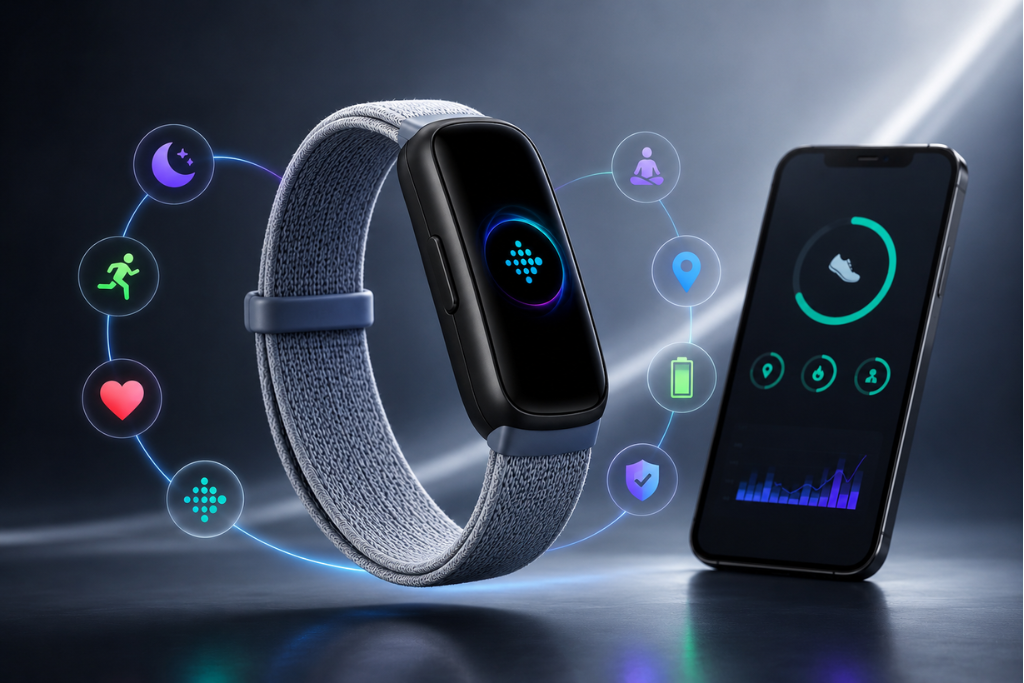
Google is continuing to expand its wearable lineup with the upcoming Fitbit Air, and new hands on details have revealed several hidden features designed to improve usability and comfort.
While the tracker’s minimalist design initially appears simple, early demos show the Fitbit Air includes smart gesture controls, LED status indicators, and a noticeably slimmer profile compared to competing wearables like Whoop.
Fitbit Air Uses Compact “Pebble” Design
The core hardware of the Fitbit Air is built into a small removable module internally referred to as the “pebble.” This compact unit houses all of the device’s sensors, battery, and internal electronics.
The tracker can be removed from wristbands and swapped between different straps, but users must align the module correctly during installation.
Google has reportedly added alignment markers to ensure proper positioning inside the band.
Hidden LED Status Light Revealed
One of the more interesting discoveries is a hidden LED status light located along the side edge of the tracker.
The wristband itself includes a small cutout that allows the light to shine through once the tracker is correctly installed.
The LED displays different light patterns depending on the device’s status, including:
- White pulsing light while charging
- Flashing red light for low battery
- Fast white blinking during firmware updates
- Solid red light for critically low battery
This hidden lighting system keeps the tracker visually clean while still offering quick status feedback.
Double Tap Gesture Adds Quick Controls
The Fitbit Air also introduces a double tap gesture feature.
Firmly tapping the top of the tracker activates the LED status indicator and provides battery information:
- White light indicates battery between 20% and 100%
- Red light signals battery below 20%
- No light means the tracker is powered off or fully drained
The gesture can also be used to silence alarms and Smart Wake notifications through the Google Health app.
Slimmer Than Whoop
Demo units currently displayed inside Google Stores in the United States have already generated comparisons with the popular Whoop fitness tracker.
Early impressions suggest the Fitbit Air has a significantly narrower and more lightweight profile, potentially making it more comfortable for all day wear and sleep tracking.
The compact form factor appears designed to target users who prefer discreet fitness wearables over bulkier smartwatches.
Focus on Minimalism and Comfort
Unlike traditional smartwatches packed with large displays and complex interfaces, Fitbit Air appears focused on:
- Lightweight design
- Passive health tracking
- Simplicity
- Comfortable long term wear
- Minimal visual distractions
This could position Fitbit Air as a direct competitor to fitness focused wearables like Whoop and Oura.
Google Expanding Wearable Ecosystem
The launch also reflects Google’s continued push into health and wearable technology following its Fitbit acquisition.
By combining Fitbit’s fitness expertise with Google Health services, the company appears focused on building a more connected wellness ecosystem across Android devices and wearables.
Conclusion
The Fitbit Air may look simple at first glance, but its hidden LED system, gesture controls, and slim lightweight design suggest Google is aiming for a more refined fitness tracker experience. As wearable competition continues growing, Fitbit Air could become a strong alternative for users seeking discreet health tracking without the bulk of a smartwatch.
